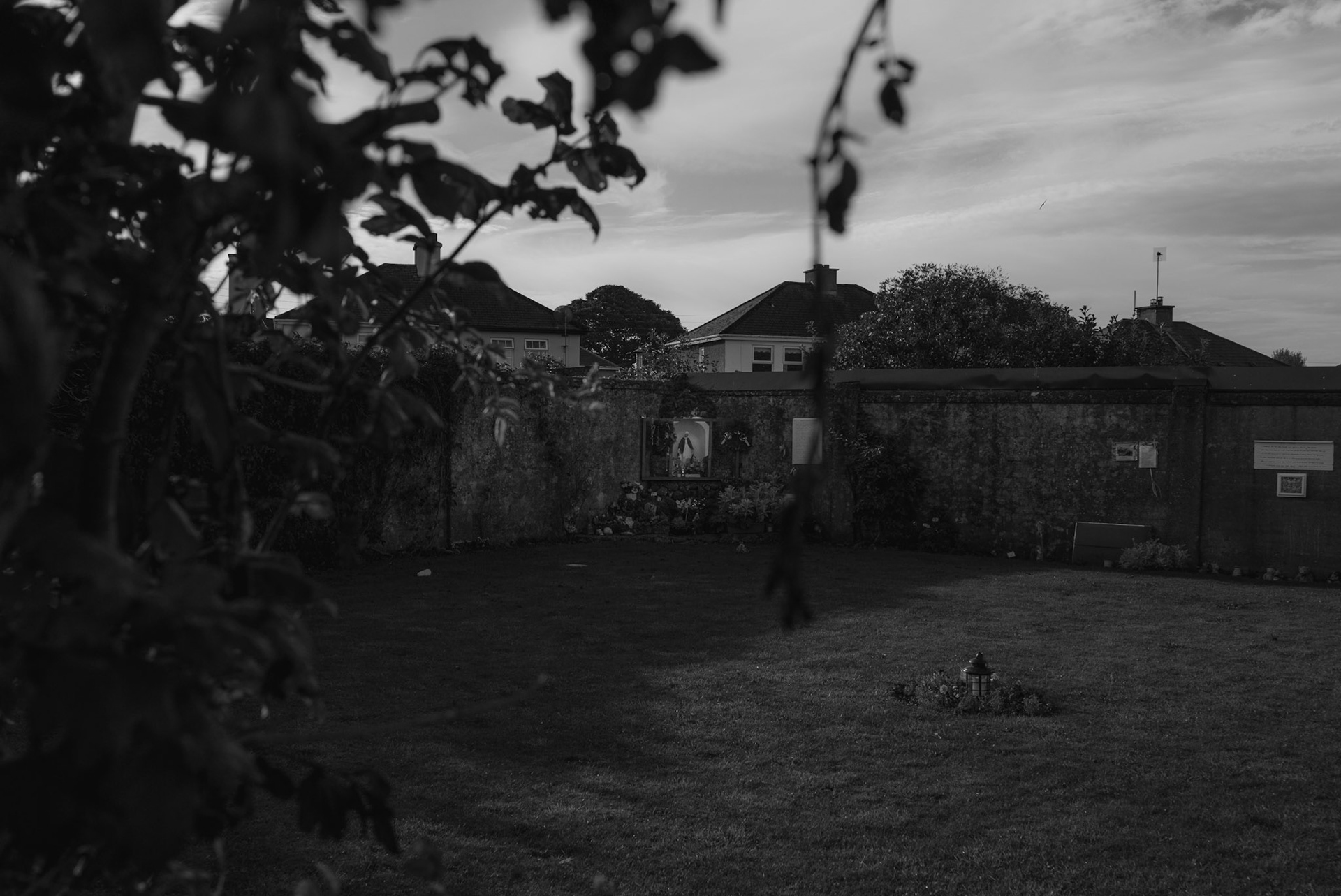
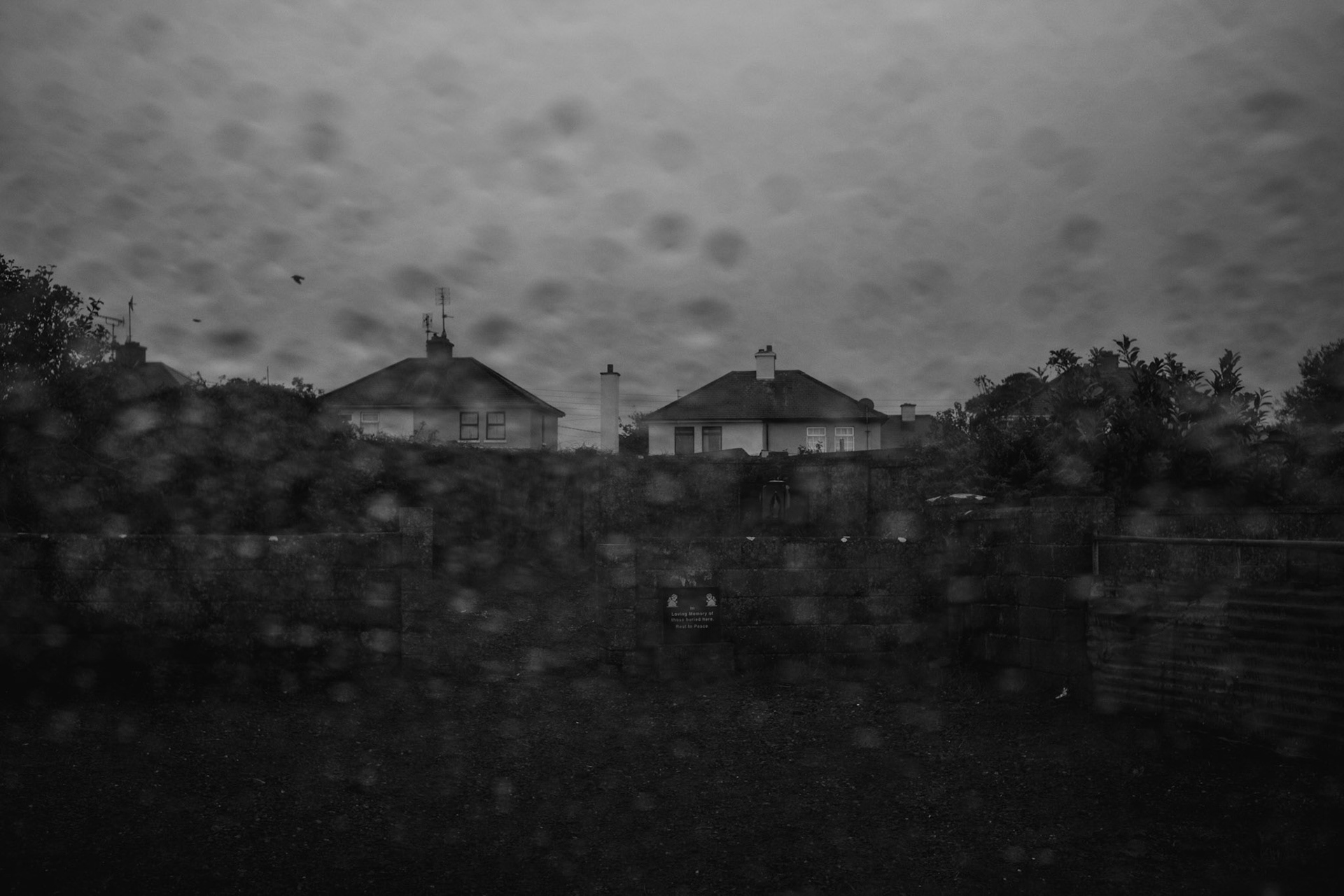
TUAM, IRELAND - SEPTEMBER 28, 2022: View of the site of the former St. Mary’s Mother and Baby Home, a former maternity home for unmarried mothers and their children run by the Bon Secours order in Tuam, Ireland, on September 28, 2022. In 2014, local historian, Catherine Corless, went public with information concerning the deaths of 798 children at the institution. Corless' research led her to conclude that almost all had been buried in an unmarked and unregistered site at the Home. Subsequent excavations carried out by an Irish government appointed Commission, found a significant quantity of human remains in a vault with twenty chambers, believed to be part of an old septic tank from the period the site was use as a workhouse. CREDIT: Paulo Nunes dos Santos for The New York Times
TUAM, IRELAND - OCTOBER 26, 2022: Local historian Catherine Corless poses for a portrait in a shed at her house in the outskirts of Tuam, Ireland on October 26, 2022. Mrs Corless became known for her work in compiling the information concerning the deaths of 798 children at the St. Mary’s Mother and Baby Home, a maternity home for unmarried mothers and their children run by the Bon Secours order in Tuam. Corless' research led her to conclude that almost all had been buried in an unmarked and unregistered site at the Home. Subsequent excavations carried out by an Irish government appointed Commission, found a significant quantity of human remains in a vault with twenty chambers, believed to be part of an old septic tank from the period the site was use as a workhouse. CREDIT: Paulo Nunes dos Santos for The New York Times
TUAM, IRELAND - SEPTEMBER 21, 2017: Local historian Catherine Corless contemplates childhood photographs in her house in the outskirts of Tuam, Ireland. Corless's investigation into a burial site in St. Mary’s Mother and Baby Home in Tuam, where she believed 796 children, most of them infants, were interred between 1925 and 196, proved to be right when a state-financed investigation uncovered the remains of babies, small children and foetuses interred where she said they would. CREDIT: Paulo Nunes dos Santos for The New York Times
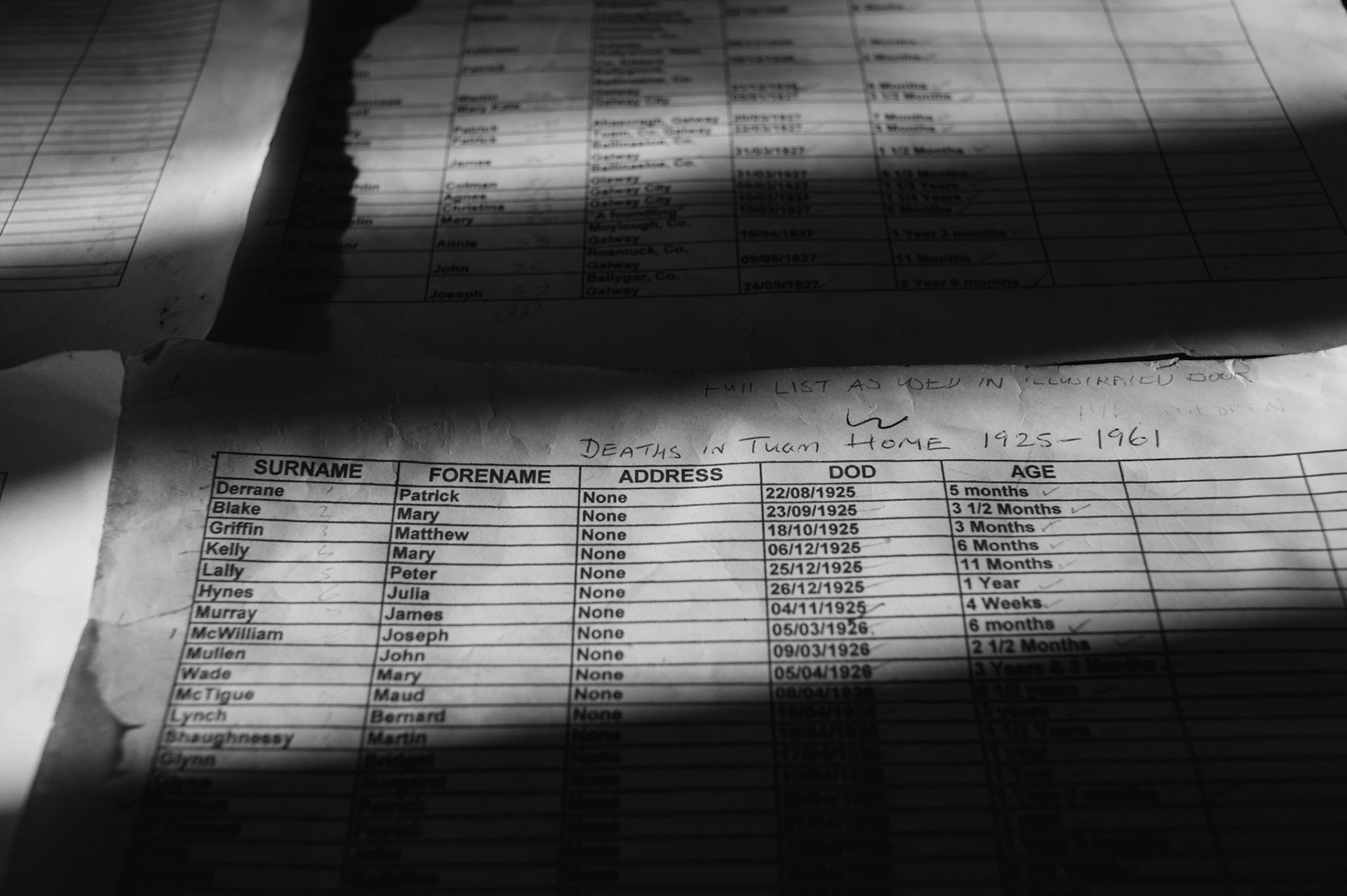
TUAM, IRELAND - OCTOBER 17, 2017: Detail view of a spreadsheet with names and details of children interred at the Mother and Baby Home in Tuam. The information, gathered by local historian Catherine Corless, was part of an investigation into the burial site where she believed 796 children, most of them infants, were interred at the Bon Secours property between 1925 and 1961. CREDIT: Paulo Nunes dos Santos for The New York Times
TUAM, IRELAND - SEPTEMBER 21, 2017: Local historian Catherine Corless attending a phone call in her house in the outskirts of Tuam, Ireland. Corless's investigation into a burial site in St. Mary’s Mother and Baby Home in Tuam, where she believed 796 children, most of them infants, were interred between 1925 and 196, proved to be right when a state-financed investigation uncovered the remains of babies, small children and foetuses interred where she said they would. CREDIT: Paulo Nunes dos Santos for The New York Times
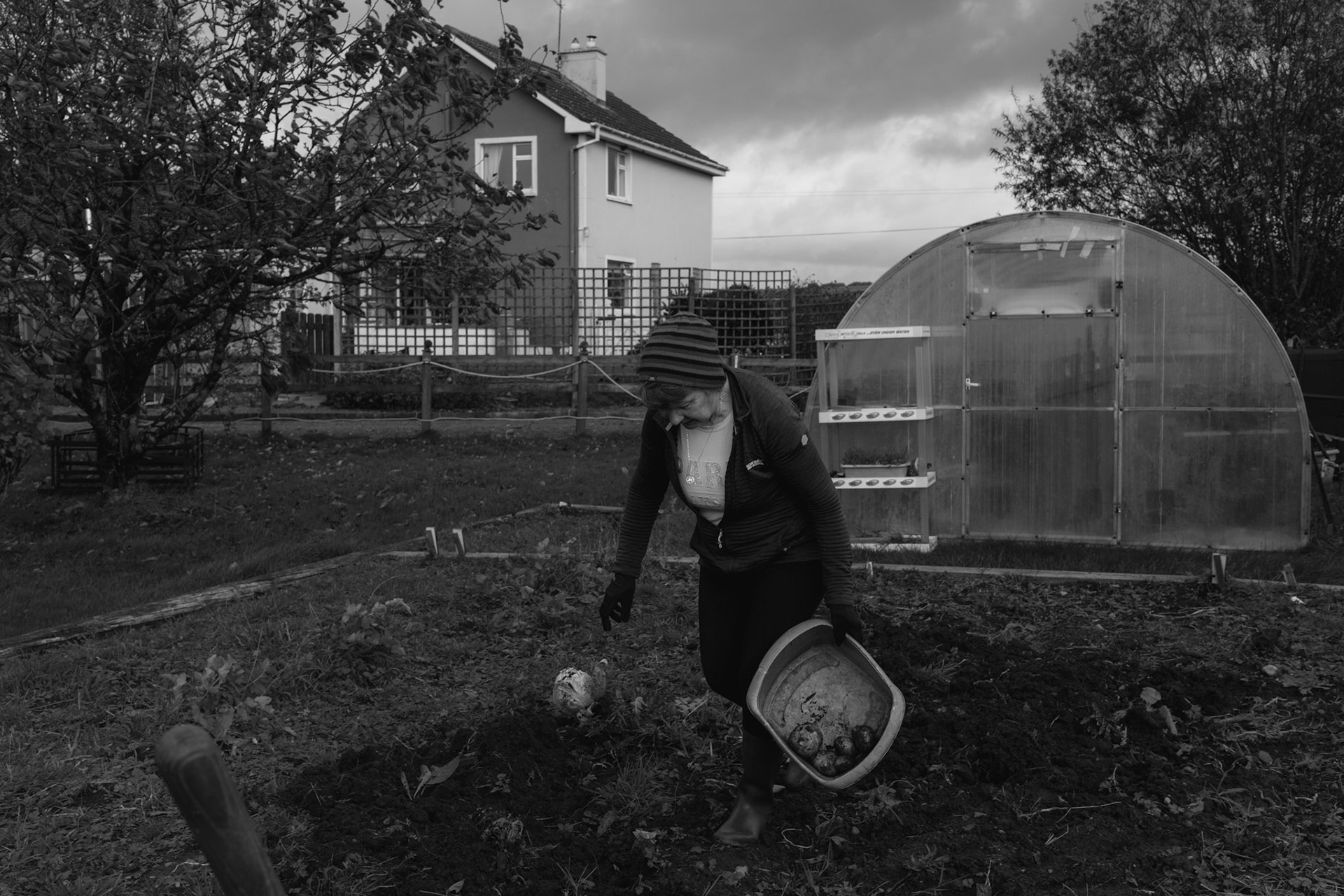
TUAM, IRELAND - OCTOBER 26, 2022: Local historian Catherine Corless digging out potatoes from a vegetable patch in her house in the outskirts of Tuam, Ireland on October 26, 2022. Mrs Corless became known for her work in compiling the information concerning the deaths of 798 children at the St. Mary’s Mother and Baby Home, a maternity home for unmarried mothers and their children run by the Bon Secours order in Tuam. Corless' research led her to conclude that almost all had been buried in an unmarked and unregistered site at the Home. Subsequent excavations carried out by an Irish government appointed Commission, found a significant quantity of human remains in a vault with twenty chambers, believed to be part of an old septic tank from the period the site was use as a workhouse. CREDIT: Paulo Nunes dos Santos for The New York Times
TUAM, IRELAND - OCTOBER 18, 2017: General view of the site where local historian Catherine Corless believes 796 children, most of them infants, were interred at St. Mary’s Mother and Baby Home between 1925 and 1961, in Tuam, Ireland. Despite the little attention paid to Corless’s claims at first, a state-financed investigation uncovered the remains of babies, small children and foetuses interred where she said they would. The access to the site recently reopened to the public after more than one year fenced by the authorities. CREDIT: Paulo Nunes dos Santos for The New York Times
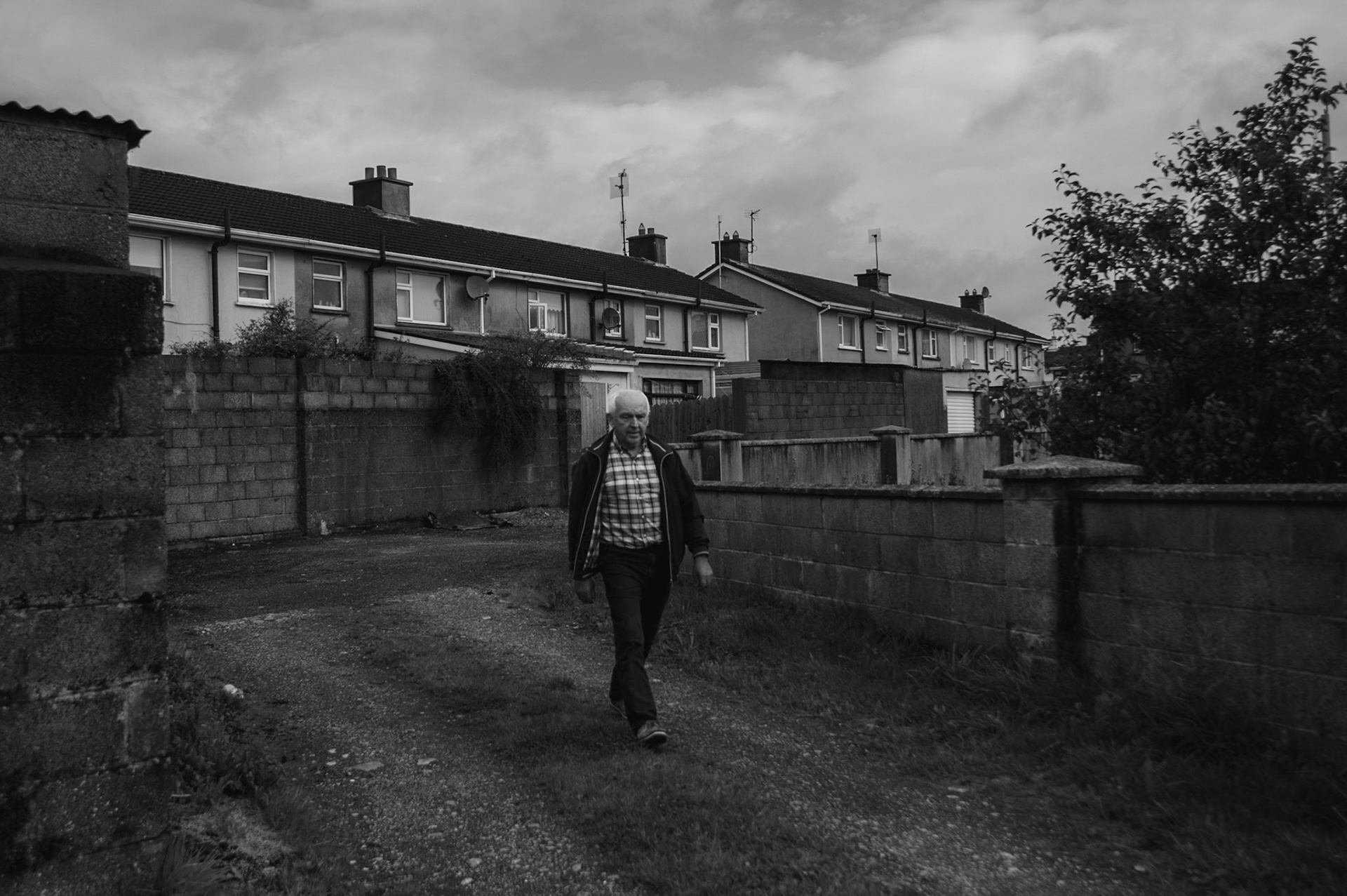
TUAM, IRELAND - AUGUST 24, 2017: PJ Haverty, a former resident of the St. Mary’s Mother and Baby Home in Tuam, walks towards the grave site where local historian Catherine Corless believes 796 children, most of them infants, were interred. Haverty is now an active campaigner in the efforts to have recognised the grim legacy of the institution which housed unmarried mothers and their children from the 1920s to 1961. CREDIT: Paulo Nunes dos Santos for The New York Times
TUAM, IRELAND - AUGUST 24, 2017: PJ Haverty, a former resident of the St. Mary’s Mother and Baby Home in Tuam, holds a photograph taken in the day he met for the first time is birth mother. With the encouragement of his foster mother, in 1975 he made contact with his birth mother, Eileen, in Brixton, London, and met her on three occasions till she passed away. CREDIT: Paulo Nunes dos Santos for The New York Times
BALLYNAMONA, IRELAND - OCTOBER 14, 2022: PJ Haverty, a former resident of St. Mary’s Mother and Baby Home in Tuam, posing for a portrait in his house in Ballynamona, a small locality near Tuam, Ireland, on October 14, 2022. Mr Haverty is one of the many "home babies" who spent his early years at the maternity home for unmarried mothers and their children run by the Bon Secours order in Tuam. In 2014, Catherine Corless, a local historian, went public with information concerning the deaths of 798 children at the institution. Corless' research led her to conclude that almost all had been buried in an unmarked and unregistered site at the Home. Subsequent excavations carried out by an Irish government appointed Commission, found a significant quantity of human remains in a vault with twenty chambers, believed to be part of an old septic tank from the period the site was use as a workhouse. CREDIT: Paulo Nunes dos Santos for The New York Times
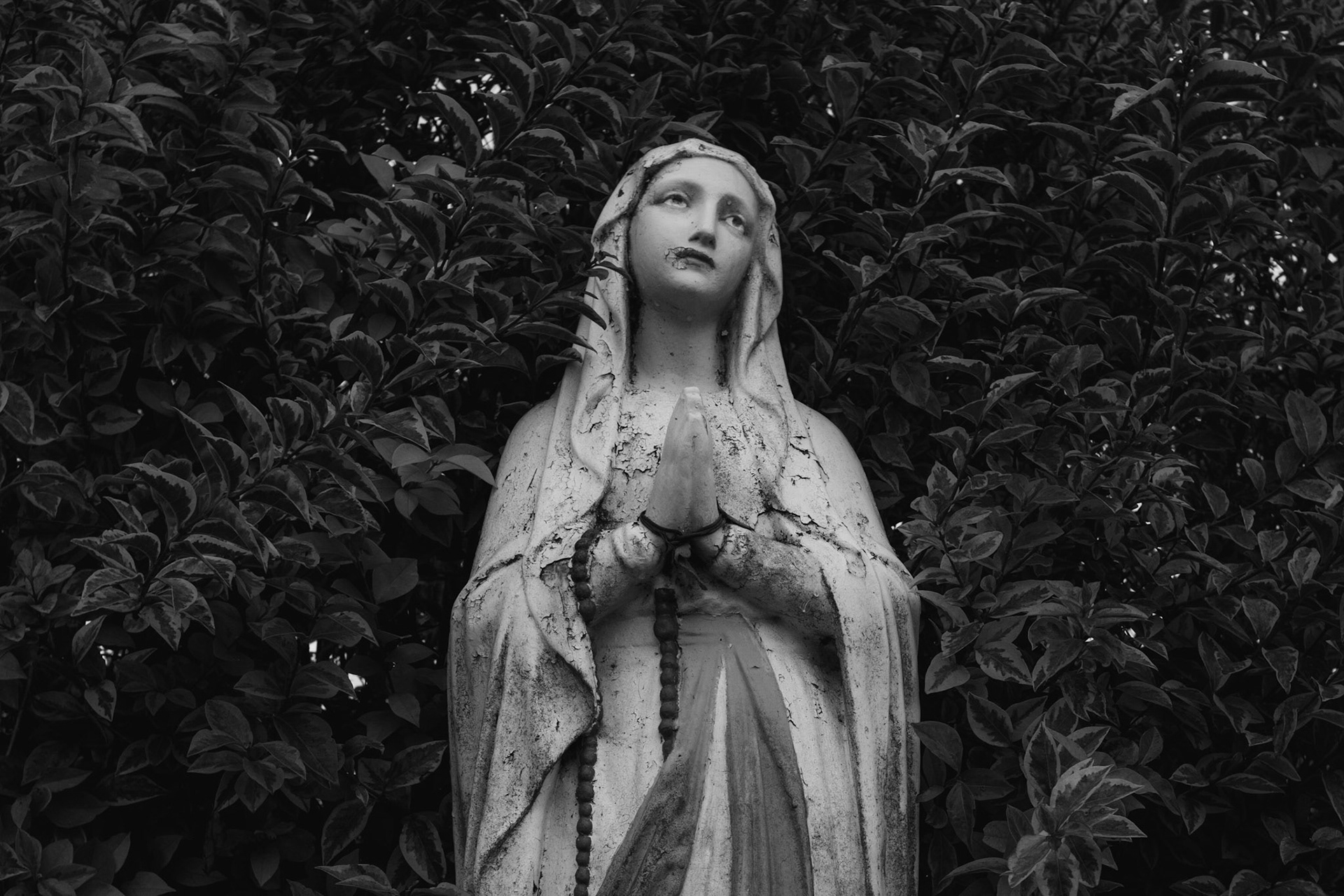
MOYLOUGH, IRELAND - SEPTEMBER 02, 2017: A statue of the Virgin Mary is seen on the side of the road near Tuam. Despite the general population showing outrage for the treatment of infants at the hands of local Catholic institutions, the devotion to the church still strong in this part of the country. CREDIT: Paulo Nunes dos Santos for The New York Times
TUAM, IRELAND - OCTOBER 13, 2022: View of the playground built on the site of the former St. Mary’s Mother and Baby Home, a former maternity home for unmarried mothers and their children run by the Bon Secours order in Tuam, Ireland, on October 13, 2022. In 2014, local historian, Catherine Corless, went public with information concerning the deaths of 798 children at the institution. Corless' research led her to conclude that almost all had been buried in an unmarked and unregistered site at the Home. Subsequent excavations carried out by an Irish government appointed Commission, found a significant quantity of human remains in a vault with twenty chambers, believed to be part of an old septic tank from the period the site was use as a workhouse. CREDIT: Paulo Nunes dos Santos for The New York Times
TUAM, IRELAND - SEPTEMBER 27, 2022: A plaque in honour of hundreds of infant bodies buried on the grounds of the former St. Mary’s Mother and Baby Home, can be seen at the entrance to the site of the former institution in Tuam, Ireland, on September 27, 2022. In 2014, local historian Catherine Corless, went public with information concerning the deaths of 798 children at St. Mary’s Mother and Baby Home, a maternity home for unmarried mothers and their children run by the Bon Secours order in Tuam. Corless' research led her to conclude that almost all had been buried in an unmarked and unregistered site at the Home. Subsequent excavations carried out by an Irish government appointed Commission, found a significant quantity of human remains in a vault with twenty chambers, believed to be part of an old septic tank from the period the site was use as a workhouse. CREDIT: Paulo Nunes dos Santos for The New York Times
TUAM, IRELAND - AUGUST 24, 2017: Frannie Hopkins, who at age of 12 in 1975, while playing with a friend, found the remains of children at St. Mary’s Mother and Baby Home in Tuam, poses for a portrait at his house in Tuam, Ireland. CREDIT: Paulo Nunes dos Santos for The New York Times
TUAM, IRELAND - JUNE 06, 2014: Barry Sweeney recounts, at his home in Tuam, the day when in 1975 he and his friend found bones and sculls of children at a site in the ‘Home’, an old orphanage called St. Mary’s, run by Sisters of Bons Secours between the years of 1925 and 1961. Mr. Sweeney’s account have recently been used by Catherine Corless, a local historian, to identify a grave site claimed to be the resting place of 796 children, most of them infants, who died at the ‘Home’. The story that emerged from Corless’s research has been reported in recent weeks in dramatic headlines around the world, with many describing the site, used in the past as a septic tank for the orphanage, as a mass grave. CREDIT: Paulo Nunes dos Santos for The New York Times
TUAM, IRELAND - SEPTEMBER 27, 2022: An art piece created by local historian, Catherine Corless, honouring hundreds of infant bodies buried in the grounds of the former St. Mary’s Mother and Baby Home, can be seen on display on a wall of the site of the former institution in Tuam, Ireland, on September 27, 2022. In 2014, Mrs. Corless went public with information concerning the deaths of 798 children at St. Mary’s Mother and Baby Home, a maternity home for unmarried mothers and their children run by the Bon Secours order in Tuam. Corless' research led her to conclude that almost all had been buried in an unmarked and unregistered site at the Home. Subsequent excavations carried out by an Irish government appointed Commission, found a significant quantity of human remains in a vault with twenty chambers, believed to be part of an old septic tank from the period the site was use as a workhouse. CREDIT: Paulo Nunes dos Santos for The New York Times
TUAM, IRELAND - OCTOBER 26, 2022: A bird flies by the Cathedral of the Assumption of the Blessed Virgin Mary in central Tuam, Ireland, on October 26, 2022. In 2014, local historian, Catherine Corless, went public with information concerning the deaths of 798 children at St. Mary’s Mother and Baby Home, a maternity home for unmarried mothers and their children run by the Bon Secours order in Tuam. Corless' research led her to conclude that almost all had been buried in an unmarked and unregistered site at the Home. Subsequent excavations carried out by an Irish government appointed Commission, found a significant quantity of human remains in a vault with twenty chambers, believed to be part of an old septic tank from the period the site was use as a workhouse. CREDIT: Paulo Nunes dos Santos for The New York Times
BALLINASLOE, IRELAND - SEPTEMBER 21, 2017: Peter Mulryan, a former resident of the St. Mary’s Mother and Baby Home in Tuam, working at his family home in Ballinasloe, Ireland. Mulryan, who grew up in a abusive foster family, is seeking information about the fate of the infant sister he has never known after she went into the St. Mary’s Mother and Baby Home in Tuam. He says Catherine Corless, whose research uncovered a pit at the home where it is suspected many children were buried, contacted him in 2014 to say she believed she had identified his sister among the 796 children interred at the site. CREDIT: Paulo Nunes dos Santos for The New York Times
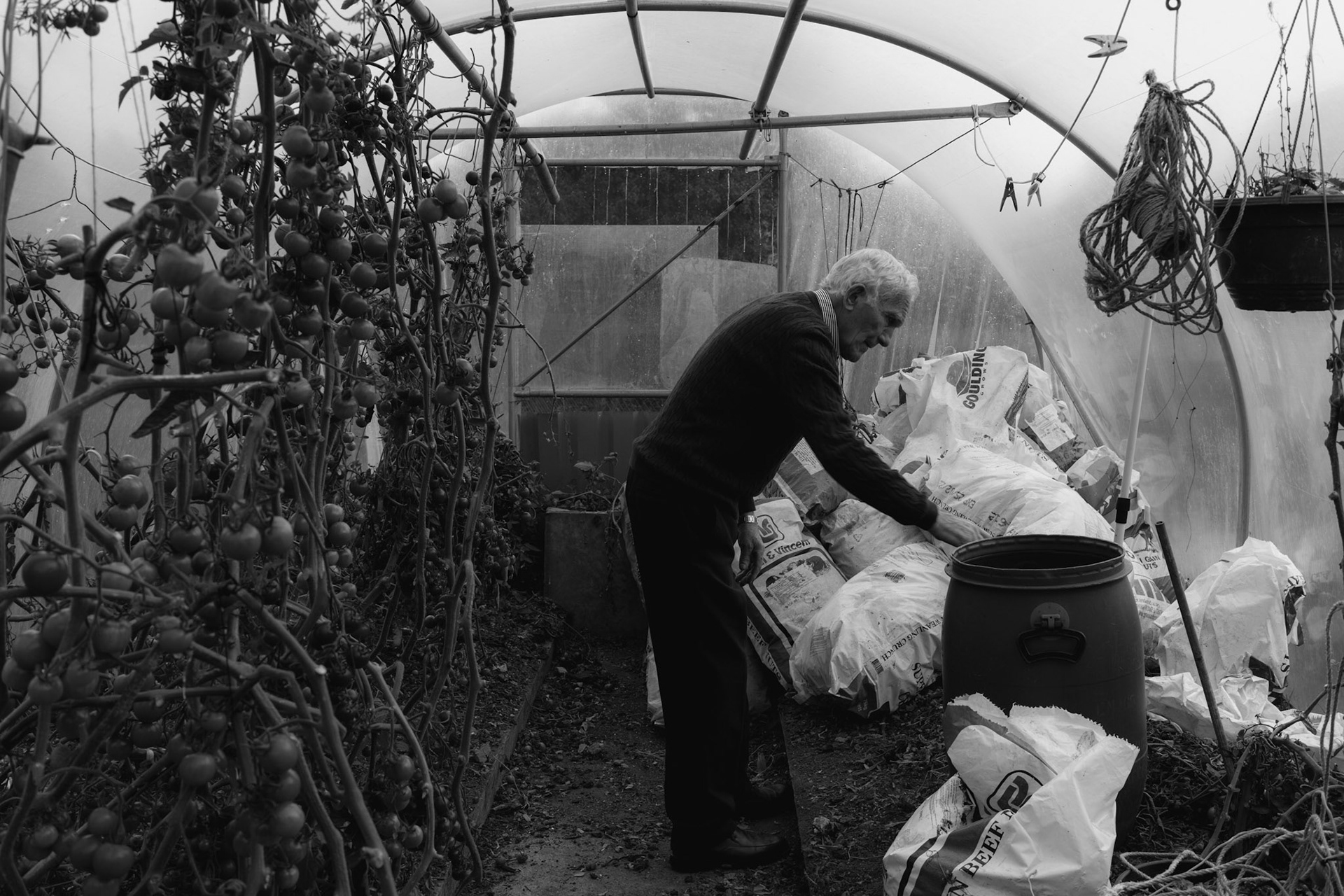
BALLINASLOE, IRELAND - SEPTEMBER 28, 2022: Peter Mulryan, a former resident of the St. Mary’s Mother and Baby Home in Tuam, tending to his greenhouse at his family home in Ballinasloe, Ireland, on September 28, 2022. Mr. Mulryan, is one of the many "home babies" who spent his early years at St. Mary’s Mother and Baby Home, a maternity home for unmarried mothers and their children run by the Bon Secours order in Tuam. In the past years he has been seeking information about the fate of the infant sister he has never known after she went into the institution in Tuam. He became aware of the existence of his sibling when in 2014 local historian, Catherine Corless, went public with information concerning the deaths of 798 children at the institution. Corless' research led her to conclude that almost all had been buried in an unmarked and unregistered site at the Home. Subsequent excavations carried out by an Irish government appointed Commission, found a significant quantity of human remains in a vault with twenty chambers, believed to be part of an old septic tank from the period the site was use as a workhouse. CREDIT: Paulo Nunes dos Santos for The New York Times
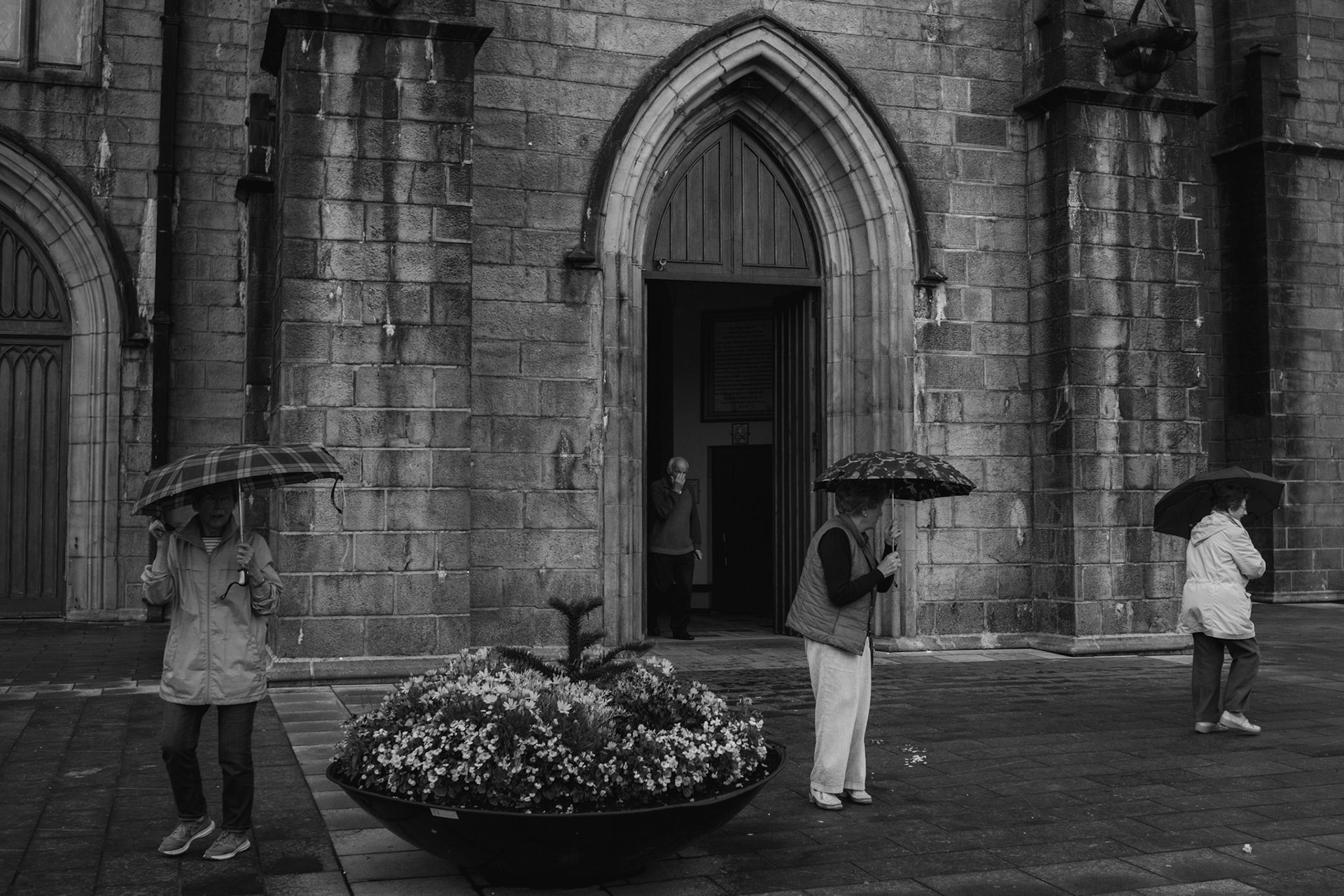
TUAM, IRELAND - AUGUST 23, 2017: Locals leave mass at Cathedral of the Assumption of the Blessed Virgin Mary, in Tuam. The centenary cathedral is the town’s epicentre, with all schools and convents built in the surrounding area. CREDIT: Paulo Nunes dos Santos for The New York Times
TUAM, IRELAND - OCTOBER 26, 2022: View of some of the headstones and statues at the cemetery in Tuam, Ireland, on October 26, 2022. In 2014, local historian, Catherine Corless, went public with information concerning the deaths of 798 children at St. Mary’s Mother and Baby Home, a maternity home for unmarried mothers and their children run by the Bon Secours order, located a few hundred meters from the town’s cemetery. Corless' research led her to conclude that almost all had been buried in an unmarked and unregistered site at the Home. Subsequent excavations carried out by an Irish government appointed Commission, found a significant quantity of human remains in a vault with twenty chambers, believed to be part of an old septic tank from the period the site was use as a workhouse. CREDIT: Paulo Nunes dos Santos for The New York Times
TUAM, IRELAND - AUGUST 23, 2017: General view of the Cathedral of the Assumption of the Blessed Virgin Mary, in Tuam. The centenary cathedral is the town’s epicentre, with all schools and convents built in the surrounding area. CREDIT: Paulo Nunes dos Santos for The New York Times
TUAM, IRELAND - OCTOBER 26, 2022: Religious icons can be seen on display for sale at a local shop in central Tuam, Ireland, on October 26, 2022. In 2014, local historian, Catherine Corless, went public with information concerning the deaths of 798 children at St. Mary’s Mother and Baby Home, a maternity home for unmarried mothers and their children run by the Bon Secours order in Tuam. Corless' research led her to conclude that almost all had been buried in an unmarked and unregistered site at the Home. Subsequent excavations carried out by an Irish government appointed Commission, found a significant quantity of human remains in a vault with twenty chambers, believed to be part of an old septic tank from the period the site was use as a workhouse. CREDIT: Paulo Nunes dos Santos for The New York Times
TUAM, IRELAND - OCTOBER 26, 2022: Carmel Larkin, one of the many "home babies" who spent her early years at St. Mary’s Mother and Baby Home,poses for a portrait in her home in Tuam, Ireland, on October 26, 2022. In 2014, Catherine Corless, a local historian, went public with information concerning the deaths of 798 children at St. Mary’s Mother and Baby Home, a maternity home for unmarried mothers and their children run by the Bon Secours order in Tuam. Corless' research led her to conclude that almost all had been buried in an unmarked and unregistered site at the Home. Subsequent excavations carried out by an Irish government appointed Commission, found a significant quantity of human remains in a vault with twenty chambers, believed to be part of an old septic tank from the period the site was use as a workhouse. CREDIT: Paulo Nunes dos Santos for The New York Times
TUAM, IRELAND - OCTOBER 02, 2022: People attending a ceremony honouring hundreds of infant bodies buried on the grounds of the former St. Mary’s Mother and Baby Home in Tuam, Ireland, on October 02, 2022. In 2014, local historian, Catherine Corless, went public with information concerning the deaths of 798 children at St. Mary’s Mother and Baby Home, a maternity home for unmarried mothers and their children run by the Bon Secours order in Tuam. Corless' research led her to conclude that almost all had been buried in an unmarked and unregistered site at the Home. Subsequent excavations carried out by an Irish government appointed Commission, found a significant quantity of human remains in a vault with twenty chambers, believed to be part of an old septic tank from the period the site was use as a workhouse. CREDIT: Paulo Nunes dos Santos for The New York Times
TUAM, IRELAND - OCTOBER 02, 2022: Flowers can be seen laid alongside some of the 796 clay figures of flowers with baby faces, created by Northern Irish artist Alison Rodgers, on display at the grounds of the former St. Mary’s Mother and Baby Home in Tuam, during a ceremony honouring hundreds of infant bodies buried here, on October 02, 2022. In 2014, local historian, Catherine Corless, went public with information concerning the deaths of 798 children at St. Mary’s Mother and Baby Home, a maternity home for unmarried mothers and their children run by the Bon Secours order in Tuam. Corless' research led her to conclude that almost all had been buried in an unmarked and unregistered site at the Home. Subsequent excavations carried out by an Irish government appointed Commission, found a significant quantity of human remains in a vault with twenty chambers, believed to be part of an old septic tank from the period the site was use as a workhouse. CREDIT: Paulo Nunes dos Santos for The New York Times
TUAM, IRELAND - OCTOBER 18, 2017: General view of the site where local historian Catherine Corless believes 796 children, most of them infants, were interred at St. Mary’s Mother and Baby Home between 1925 and 1961, in Tuam, Ireland. Despite the little attention paid to Corless’s claims at first, a state-financed investigation uncovered the remains of babies, small children and foetuses interred where she said they would. The access to the site recently reopened to the public after more than one year fenced by the authorities. CREDIT: Paulo Nunes dos Santos for The New York Times
TUAM, IRELAND - OCTOBER 18, 2017: The tomb of Julia Devaney in Tuam Cemetery, Tuam. Julia Devaney is unique in that she left a record of her almost 40 years in the Tuam Mother and Baby Home. From entering the home as a child in about 1923, to leaving it as an employee when it closed its doors for the last time on September 16, 1961, she had an insight into every aspect of the place. CREDIT: Paulo Nunes dos Santos for The New York Times